Privacy ·
Cookieless Marketing: First-Party Data and Better Measurement
Strategies for navigating a cookieless future with first-party data, contextual targeting, and new measurement approaches.
By Abhay Sharma
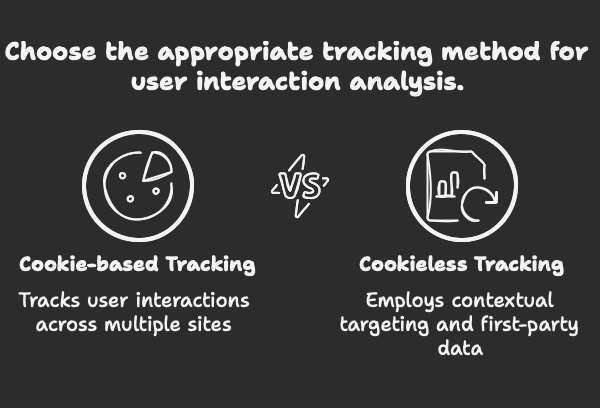
Third-party cookies are small text files stored on users' browsers by websites other than the one they are currently visiting. These cookies allow advertisers to track user activity across multiple websites, enabling personalized ads and measurement of ad effectiveness. Recently, privacy concerns and regulatory changes have driven major browsers like Google Chrome, Safari, and Firefox to phase out support for third-party cookies, significantly reshaping the marketing landscape.
What's Happening with Third-Party Cookies?
Browsers are removing third-party cookies primarily due to increasing privacy regulations (GDPR, CCPA) and consumer demand for better data protection. Cookies that track users across different websites without explicit consent are seen as intrusive. Google Chrome, which holds the largest browser market share, plans to phase out third-party cookies by 2024, following similar moves by Safari and Firefox.
How This Affects Marketers
The disappearance of third-party cookies affects several key marketing areas:
- Audience Targeting: Marketers previously depended on cookies for precise audience segmentation and retargeting.
- Remarketing Strategies: Personalized retargeting ads become more challenging without reliable cross-site tracking.
- Measurement and Attribution: Understanding the customer journey across multiple touchpoints will be more complex without cookies, potentially reducing measurement accuracy.
These changes require marketers to rethink traditional strategies and innovate rapidly to maintain campaign effectiveness.
Real-Life Scenario: E-commerce Company Example
Consider an e-commerce business that heavily relies on retargeting ads powered by third-party cookies. These ads target users who previously visited product pages but didn't complete a purchase. With the end of cookies, the company struggles to deliver personalized ads, potentially leading to lower conversion rates and higher customer acquisition costs.
The marketing team now needs to shift strategies, exploring alternative methods like first-party data collection (email sign-ups, loyalty programs), contextual advertising, and cohort-based targeting approaches.
Alternatives and Solutions
Marketers have several viable alternatives:
- First-Party Data: Collecting user data directly through methods like registrations, subscriptions, or loyalty programs. This provides reliable insights and enables personalized marketing.
- Contextual Advertising: Targeting ads based on the content of the website rather than the user's previous browsing behavior. For instance, placing athletic gear ads on sports news websites.
- Cohort-Based Targeting (Privacy Sandbox): Google's initiative groups users based on interests without identifying individual behavior, providing a privacy-compliant way to target relevant audiences.
Each of these approaches offers actionable strategies marketers can immediately implement to adapt effectively.
Why Incrementality Matters
Without third-party cookies, marketers need reliable ways to measure campaign effectiveness. Incrementality testing helps marketers see whether conversions genuinely result from their marketing efforts or if they would have happened anyway. This clear measurement allows marketers to optimize strategies effectively and confidently in a cookieless environment.
Implementation Strategies
To prepare for a cookieless future, consider these implementation steps:
- Audit your current cookie dependencies: Identify all marketing activities that rely on third-party cookies.
- Enhance first-party data collection: Develop compelling value propositions to encourage users to share their data directly.
- Test contextual targeting: Begin experimenting with content-based targeting to refine approaches before cookies disappear entirely.
- Explore privacy-friendly partnerships: Consider publisher relationships and data clean rooms that allow privacy-compliant data sharing.
- Invest in consent management: Build transparent systems that clearly communicate data usage and obtain proper consent.
Conclusion
The phase-out of third-party cookies marks a fundamental shift for digital marketers. By proactively adopting alternative methods—first-party data strategies, contextual targeting, cohort-based approaches—and embracing incrementality measurement, marketers can navigate the new landscape effectively. This transition, while challenging, creates opportunities for more transparent, privacy-conscious marketing that may ultimately build stronger customer relationships.