Analytics ·
Understanding Attribution Windows in Performance Marketing
Learn how to choose the right attribution window for accurate conversion insights and maximizing marketing ROI.
By Abhay Sharma
Attribution windows are important for measuring how effective marketing campaigns really are. They help marketers understand which ads actually led to a sale or conversion. Knowing the right window can make the difference between accurate data and misunderstood results. This affects everything from budgets to planning future campaigns.
What is an Attribution Window?
An attribution window is the period after someone interacts with an ad, during which their actions (like a purchase or signup) are linked back to that ad. There are two main types of windows:
- Click-through attribution: When someone clicks an ad and then converts.
- View-through attribution: When someone sees an ad but doesn't click, yet later converts.
For example, a 7-day click-through window means that any purchase made within seven days after clicking the ad counts as a conversion linked to that ad.
Real-Life Scenario (Hypothetical)
Imagine you run an online clothing store called "Urban Threads." You advertise mainly through Facebook Ads. Initially, you choose a 1-day click attribution window. With this setup, only purchases made within one day of clicking your ad count.
After a month, you notice conversions seem lower than expected. You decide to change the window to a 7-day click window. Suddenly, reported conversions increase. This happens because many customers take a few days before deciding to buy after clicking the ad.
A few weeks later, you expand to a 31-day window. Conversions rise again slightly because some customers think longer before buying—especially for more expensive items.
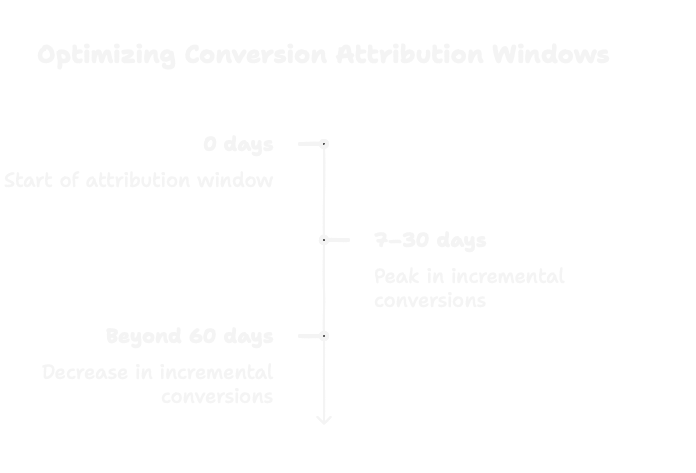
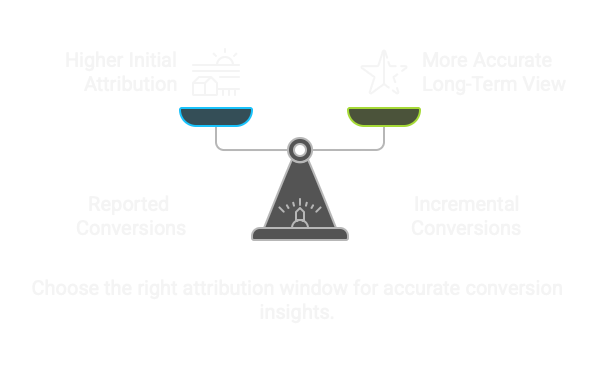
But if extending the attribution window helps boost performance, why not keep increasing it? The issue is that a very long window, like 365 days, attributes almost all conversions to the campaign—even sales that would have happened without the ads. This exaggerates results and doesn't reflect the true impact of the campaign. The goal is to balance accurately showing the campaign's effect while improving incrementality.
Incrementality and Choosing the Right Attribution Window
Incrementality measures whether a conversion was truly caused by a specific marketing effort or would have occurred anyway. The right attribution window helps marketers accurately track incremental conversions. By selecting the correct window, you better understand how much your campaigns genuinely influence customer actions.
When picking an attribution window, think about:
- Type of product: If it's something quick to buy, like a discounted phone case, a short window (1–3 days) works best. For something expensive or requiring more thought, like furniture or tech gadgets, a longer window (7–30 days) is better.
- Length of sales cycle: If people usually take time comparing options (like travel packages or courses), longer windows make sense.
- Campaign goals: Short-term goals like flash sales benefit from shorter windows, while building brand awareness or selling high-cost products usually needs longer windows.
Practical Examples
For instance:
- A fast-fashion retailer running a weekend sale could use a 1-day click window.
- A home-appliance store might choose a 7–14 day click window, as customers typically take more time to decide.
- A B2B company selling software services would typically benefit from a 30-day click and view window due to longer decision processes.
Finding the Sweet Spot
The ideal attribution window isn't about showing the highest number of conversions; it's about showing the most accurate picture of your campaign's performance. Too short, and you miss legitimate conversions that your campaign influenced. Too long, and you claim credit for conversions that would have happened regardless.
A good approach is to analyze your customer journey data to identify:
- How long customers typically take to make a purchase after first engaging with your brand
- When conversion rates start to plateau after initial engagement
- The point at which extending your window further starts attributing primarily non-incremental conversions
Testing Different Windows
Many platforms allow you to compare multiple attribution windows simultaneously. Use this capability to experiment with different settings and find the most appropriate window for your business.
Remember that the perfect attribution window isn't necessarily the one that shows the most conversions—it's the one that most accurately reflects the true impact of your marketing efforts and helps you make better decisions about where to invest your budget.